A Kent-based sheet metal factory, Contracts Engineering, invested heavily in robotic welding technology five years ago. The robot, affectionately nicknamed "Zelda the welder", cost £250,000. However, this investment has paid off handsomely, with pre-tax profits quadrupling and the company expanding to hire additional human welders to work alongside the machines.
Despite this success story, Contracts Engineering remains an exception. UK manufacturing is lagging significantly behind global competitors in adopting automation. A combination of low business investment, a skills shortage, high energy costs, and risk aversion is hindering progress. This lack of investment is putting UK factories at risk.
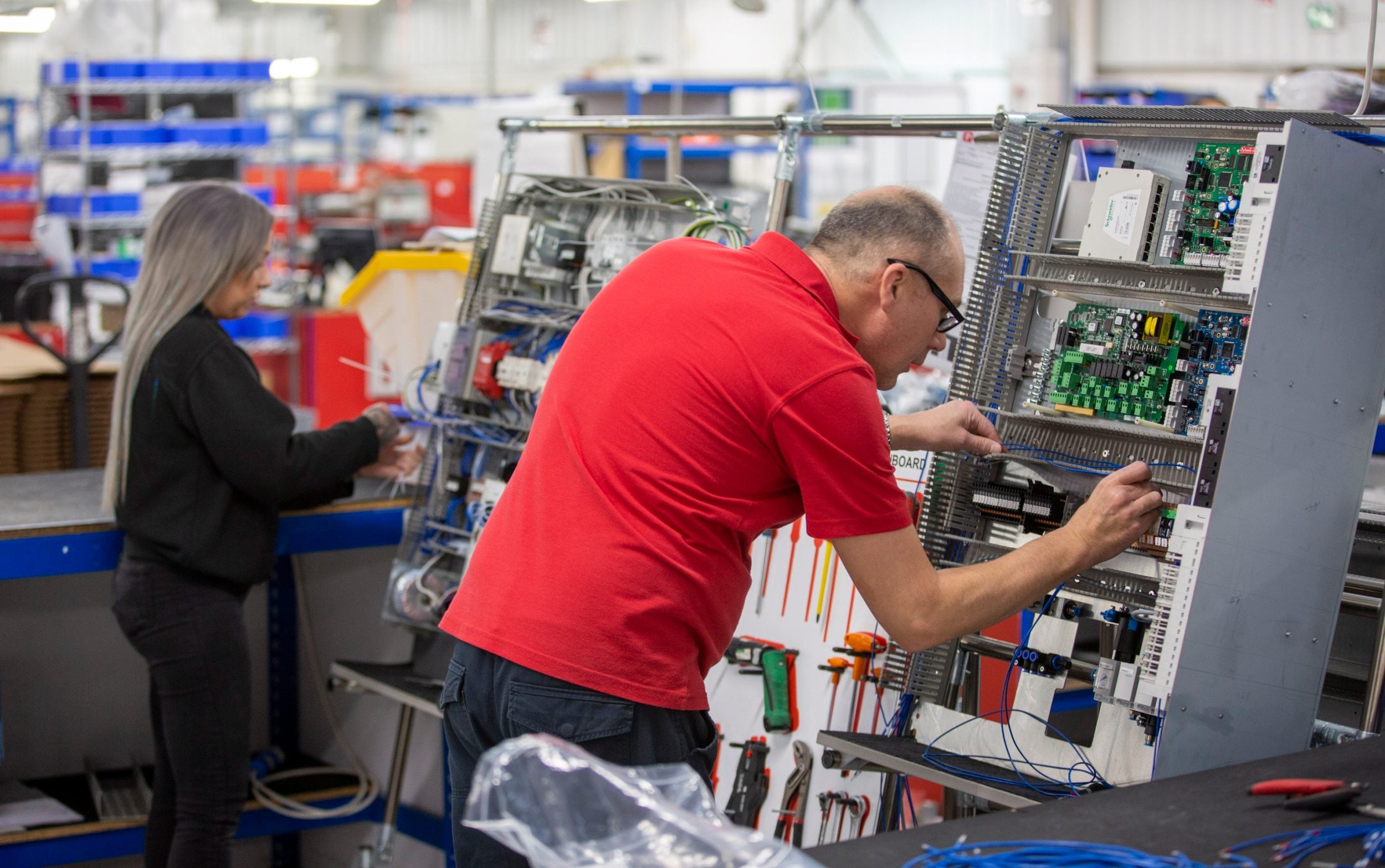
South Korea leads the way in automation, with 1,012 industrial robots per 10,000 manufacturing workers. The UK lags far behind, with only 111 robots per 10,000 workers, according to Make UK. This is roughly half the EU average of 208 and a quarter of Germany’s 415.


Analysis by the Institute for Public Policy Research (IPPR) reveals that British manufacturing workers have 47% less access to machinery, tools, and technology compared to their counterparts in similar economies.
This technological disadvantage is impacting the UK’s global standing. Between 2005 and 2023, the UK’s ranking in the United Nations Industrial Development Organization’s competitive industrial performance index plummeted from 10th to 19th. The UK’s share of global manufacturing has also declined, from 3.1% in 2000 to 1.9% in 2022, while its share of exports has fallen from 3.7% to 1.5%.
Make UK estimates that if British manufacturers were to catch up with the technological advancements of their global competitors, it could add 5% to the UK economy by 2035, equivalent to an extra £150 billion.
Catherine Barratt, the chief executive of BAMUK, which owns Contracts Engineering, emphasises the need for UK manufacturers to embrace automation to remain competitive. "The speed of adoption overseas is really high. The UK really needs to adopt automation at a higher pace and at a greater scale."
Faye Skelton, head of policy at Make UK, highlights that Britain is missing out on core elements of modern manufacturing that are now standard in leading industrial economies.